Saturday, October 29, 2011

Costa Rica - Tree snakes

We have encountered snakes most nights whilst in the field looking for invertebrates. We have spotted many species on and around the property we are living. The majority are arboreal (tree climbers). The diet of these snakes is quite diverse. Many feed upon frogs and lizards, while some of the larger species will take birds and bats. The specialists, however, feed on animals that few other snakes do. Some species specialise in feeding upon snails, while another is a scorpion specialist. Here's a selection of those we have seen to da

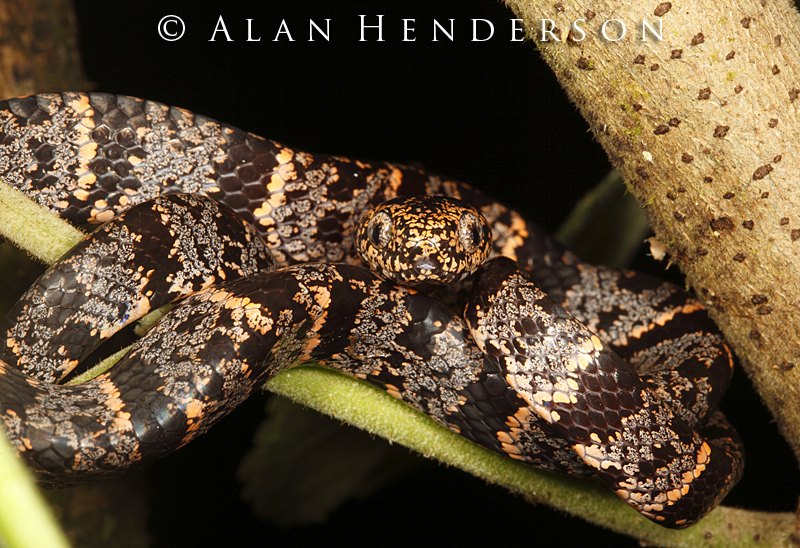
A very strikingly patterned Bicoloured Snail-eater, Dipsas bicolor

Bicoloured Snail-eater, Dipsas bicolor

Bicoloured Snail-eater, Dipsas bicolor. We weren't lucky enough to encounter one of these in the act of eating a snail. In fact, snails seemed far less abundant than in the Australian tropics.

Neotropical Bird-eating Snake, Pseustes poecilonotus. This is one of the largest and most robust tree snakes we encountered, no doubt capable of feeding on moderately sized birds.

Neotropical Bird-eating Snake, Pseustes poecilonotus

Blunt-headed tree snake, Imantodes cenchoa. This species is very  wirey, and every individual we found would coil itself into multiple loops as above. A very inoffensive snake which had no objection to being picked up.

Blunt-headed tree snake, Imantodes cenchoa

Cat-eyed snake, Leptodeira septentrionalis. This species is a  frog specialist. We  found three of them with the hind legs of tree frogs disappearing into their mouths.

Snail-eater, Sibon nebulatus

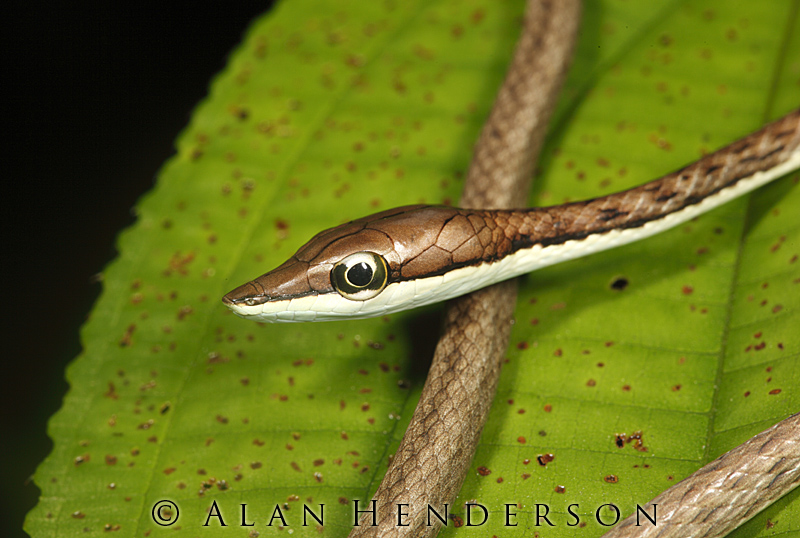
Brown Vine Snake, Oxybelis aeneus. These snakes are incredibly thin hence the name, and blend in very well amongst the chaos of vines and branches within the rainforest. This one was an easy find - sitting on a green leaf.

Brown Vine Snake, Oxybelis aeneus


Tuesday, October 11, 2011

Cost Rica - AraƱas

The spider fauna on the Osa Peninsula is rich and diverse. All the species here are new to us of course, but some of the families are too. The most obvious spiders here are from the Ctenidae; the wandering spiders. There are numerous species here and are easily spotted at night using a head torch. There are several species of tarantulas (Theraphosidae) here too, and we recently found a road side cutting with large numbers of hand-sized specimens (Brachypelma angustum) sitting outside their burrows.

Every night we see more and more spiders. Here is a small selection of the spiders we have encountered so far - some of the smaller species are truly spectacular.

A 'leopard' wandering spider, Ctenidae 

Red-thighed Wandering Spider, Cupiennius coccineus

Costa Rican tarantula, Sericopelma sp.

Male tarantula, 'Crypsidromus sp.'

Costa Rican Orange-mouth Tarantula, Psalmopoeus reduncus (female)


Male Costa Rican Orange-mouth Tarantula, Psalmopoeus reduncus (male)


Costa Rican Orange-mouth Tarantula, Psalmopoeus reduncus

Silverback Cross Spider, Argiope savignyi

A huntsman spider, formerly Olios now being reclassified.

Flame-bellied Orb-weaver (Eriophora sp.), wrapping prey

Flame-bellied Orb-weaver (Eriophora sp.) This species has a huge ladder-like orb-web which often connects with the ground. During the day they hide above the web in a curled leaf.

A bizarre Lynx spider, Oxyopidae. This species lies flat underneath broad leaves.

Not sure about this one - could be Oxyopidae or a Mimetid

Pedipalps to be proud of. A male pirate spider, Mimetidae.

The female of the same species. We could not identify this Mimetid beyond family level. The eye-spots on the abdomen make it look a little like a South Park character.

Another individual of the same species.

A Red house spider (Nesticodes rufipes). This species seems at home both in houses and within the rainforest.

A small but robust Oxyopid feeding on a wasp.  The spider is hanging from a strand of silk.

Selenops sp. This lighting fast spider is at home on rocks and on tree trunks.

The spiny Micrathena sexspinosa. A common orb-weaver on the Osa Peninsula. 

A large Scytodes sp.; a spitting spider. These six-eyed hunters eject venomous silk from their spinnerets. We were able to capture action in the studio.

A jumping spider (Salticidae). 

A triangular orb-weaver, unknown species.

Friday, October 7, 2011

Tent-making Bats

Tent-making bats are relatively common in Costa Rica, and there are 15 species here.  Once you know what you are looking for, the bent leaves stand out like beacons in the rainforest where these animals are roosting. The bats roost underneath several of the broad leafed plant species, and seem to favour fan palms and heliconia leaves. They chew the across the underside of the leaves to cause them to hang down at the sides in order to create a protective canopy. A group of these bats will contain a single male and a harem of females. These intriguing little bats are frugivores, and feed on a variety of rainforest fruits.  

These bats are roosting only metres from our front door.  This is possibly Uroderma  sp. , however many of the tent-makers in Costa Rica look superficially alike. 

These two are cooperating for the camera, however, it is difficult to sneak under the tent without  scaring them away. They have large eyes and relatively good eyesight.

Sunday, October 2, 2011

Costa Rica - A mixed bag

This post is a bit of everything - no particular theme just various species we have encountered and photographed over the last couple of weeks.

An adult male Basilisk (Basiliscus basiliscus).  These lizards can run across the surface of water on their hind legs. We see them do this across our local river, the Rio Tigre.  This is incredible to witness.

A Costa Rican huntsman, possibly from the genus Olios. We have recently observed two leaf-nests of juveniles (up to 4th instar)  residing together without an adult present. They were clearly foraging around the nest and a number of individuals returned to the nest once they were disturbed. This is very unusual behaviour for this group of spiders.

A cicada. One of several large species that we have seen on the Osa .

A predatory 'orange-faced katydid'. We have yet to identify this species.

A very large and spectacular reduviid. This assassin bug seems to specialise upon hymenopteran prey. We found one feeding on a wasp twice its size. This individual is feeding on a Golden carpenter ant (Camponotus sericeiventris). This is another species we have not been able to identify. Too many invertebrates, too little information!

Golden carpenter ant (Camponotus sericeiventris)

A juvenile Terciopelo or Fer-de-lance (Bothrops asper), Costa Rica's most feared snake. I have found eight of them so far - they are very common in this region.  Despite their reputation for aggression, most of the individuals have been quite tolerant of our presence, and timid rather than agressive.


The same  juvenile Terciopelo. Juveniles will often sit up a metre or so off the ground. This one was perched on a pineapple plant about a metre off the ground.

A large ant which the locals call a 'bala' ant due to the bullet like nature of the sting - most likely in the genus Dinoponera. The true bala ant (Paraponera clavata) reputedly has the most painful sting of all ants. It is found on the Caribbean side of Costa Rica.  

A Blunt-headed tree snake (Imantodes cenchoa)

Disc-winged bats (Thyroptera tricolor) within an unfurled Helconia leaf. This species lives in small groups and  moves to a new roosting site every night. This is because they growing leaves unfurl so quickly that within 24 hours they are no longer suitable. They use the suction discs to grip onto the leaves - you can see a number of the bats' discs in this image.

A close-up of the disc on the wing of Thyroptera tricolor. This one gripped onto my finger nail and had incredible holding power.

A iridescent Euglossine bee (orchid bee)
 bee visiting a flower.

A black and white Carabid beetle, a scavenger found on leaves at night.

Wet forest toad (Bufo melanochloris). We have many Giant (Cane) toads here too. It is a bit strange coming  from north Queensland to Costa Rica and seeing Cane toads in their native habitat.

Wet forest toad (Bufo melanochloris)

A close-up of Bufo melanochloris